When Summer Vacations Begin, Work-Life Balance Takes on a Different Meaning Across Two Full-Time Worlds
Every year, summer vacations arrive with the same energy across Indian households.
Children are thrilled. Parents are... negotiating survival.
The school routine disappears overnight. Lunchboxes are replaced with snack demands every 20 minutes. Video calls compete with cricket commentary from the living room, sibling fights, unfinished holiday homework, summer camp logistics, and the eternal chorus of:
“What are we doing today?”
“I’m bored.”
“What’s next?”
“Can I have screen time?”
“Can I invite a friend home?”
“Are you still working?”
And somewhere in the middle of all this, parents are still expected to log into meetings looking calm, composed, productive, and fully available.
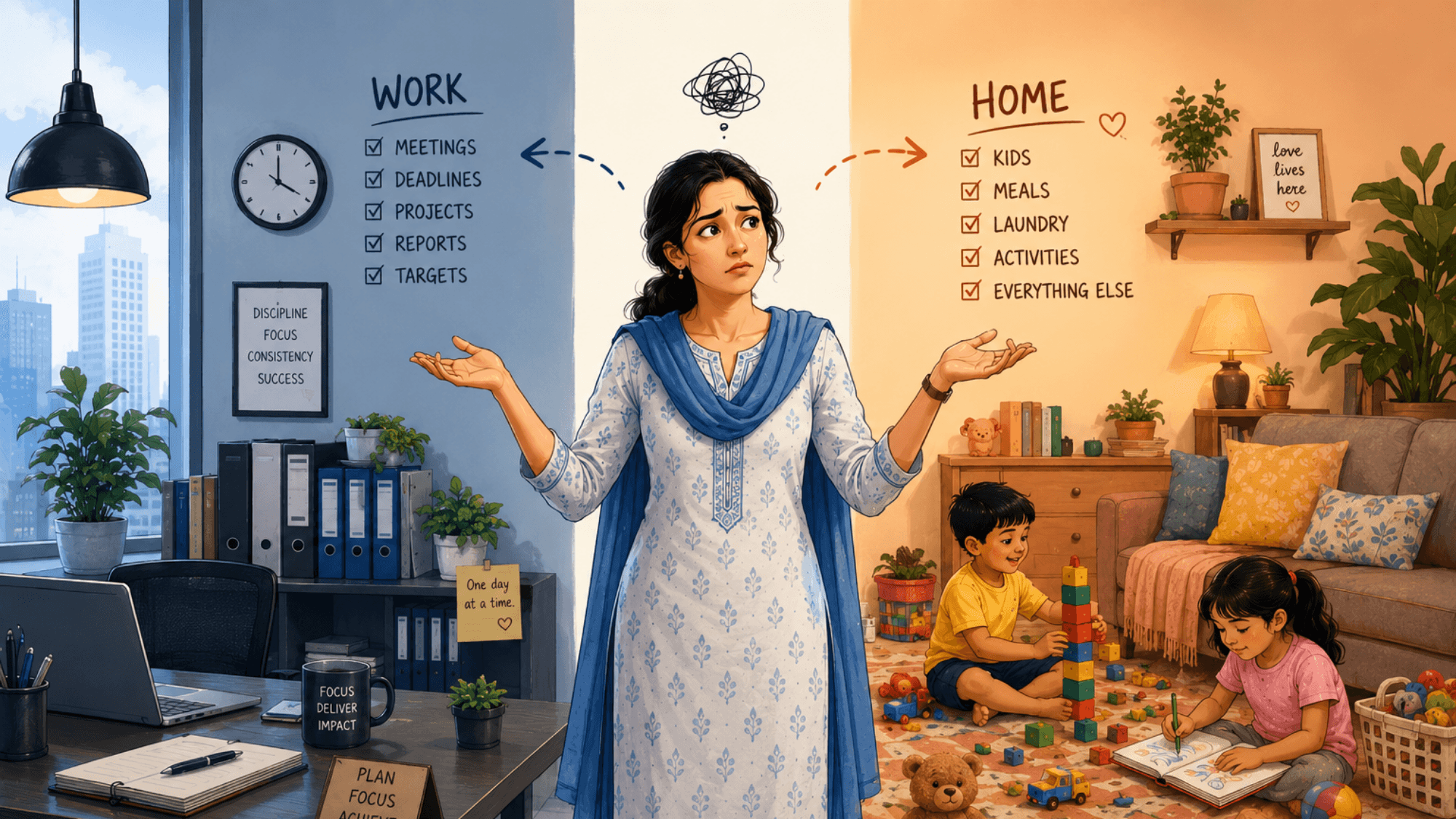
What often goes unseen is the constant mental and emotional shifting parents are doing through the day — moving between two full-time worlds that both demand presence, patience, responsiveness and outcomes.
One moment you are resolving a workplace escalation. The next, you are negotiating sibling conflicts, snack requests, boredom, emotional meltdowns, or screen-time battles.
And the transition between those worlds is rarely as seamless as it may appear on a virtual call.
As a working mother, I have increasingly realised that summer vacations may be one of the least acknowledged stress tests for working parents.
Not because parents dislike having children at home.
Quite the opposite.
Many of us genuinely want this time with them.
But modern parenting, modern work, and modern lifestyles are colliding in ways that feel far more layered and demanding than they used to.
Every Day Needs Planning
A teammate once said: “My toughest month is not appraisal season. It’s May.”
I laughed instantly because I understood it viscerally.
Summer vacations turn every day into micro-planning.
Who will supervise lunch.
What the children are doing during meetings.
Whether they have already spent too much time on screens.
How to manage a client call during peak boredom hours.
Whether there is enough emotional energy left by evening to still be patient and present.
And parenting itself has changed.
One parent jokingly told me: “Our parents told us to go outside, play, and come back before dark. Our children need structured engagement every few hours.”
We laughed. But there was truth underneath that humour.
Many of us grew up with cousins nearby, apartment communities full of children, grandparents at home, and entire afternoons spent outdoors.
Today, many urban families are parenting in nuclear households — indoors, highly supervised, digitally exposed, and with far fewer informal support systems.
Parents are not just managing children anymore.
They are managing boredom, screens, emotional energy, logistics, guilt — and work meetings in between.
The Summer Camp Debate No One Talks About
And no, summer camps are not always the magical solution they are made out to be.
Some parents genuinely want holidays to feel slower and less programmed. Others are uncomfortable with how screen-heavy childhoods have already become.
Many children are already exhausted after a packed academic year.
And yet, when schools shut for two months while work continues exactly as before, parents are often left negotiating impossible choices.
This Is No Longer Just a “Women’s Issue”
Traditionally, these conversations were framed around mothers.
But increasingly, I also see fathers struggling quietly.
Many fathers today genuinely want to participate more actively — not just in school pickups, cooking, or schedules, but also in the emotional and mental load that parenting now involves.
And yet, many still hesitate to openly ask for flexibility because workplace culture often continues to reward uninterrupted availability.
So people compensate silently.
Late-night emails after children sleep.
Taking calls from parked cars outside activity centres.
Working after midnight because half the day disappeared into caregiving.
And then feeling guilty in both places: at work and at home.
The Invisible Reality of Single Parents
And then there are single parents.
One single mother once told me: “I don’t know if I manage. I just move from one hour to the next.”
There was a quiet power in the honesty of that statement.
Because unlike dual-parent households, there is often no one to “tag in.” No alternating schedules. No backup adult.
And yet, many single parents continue showing up to work every day looking completely composed. Sometimes we never realise the level of invisible emotional labour sitting behind a perfectly normal Teams call.
The Small Moments Employees Notice
Policies absolutely matter. Flexible work arrangements, leave structures, hybrid models, and employee benefits create the foundation for support.
But during phases like summer vacations, employees also become deeply aware of something else: how those policies are experienced in everyday interactions.
The hesitation before telling a manager: “I may need to step away for an hour.”
The discomfort when a child briefly walks into a call.
The quiet worry: “Will this affect how committed I am perceived to be?”
And perhaps this is where organizations and leaders are also being quietly invited to evolve.
The challenges themselves are not entirely new. But lifestyles, parenting realities, support systems, and expectations have changed dramatically.
Which means perhaps workplace cultures and leadership responses also need to evolve alongside them.
Many urban families today are navigating parenting with shrinking support systems, increased safety concerns, screen-heavy lifestyles, and children who need far more engagement and emotional presence than earlier generations perhaps did.
Which means the question is no longer only: “How do parents manage summer vacations?”
But perhaps also:
- How can children experience healthier and less isolated summers?
- How can caregiving become more sustainable within households?
- How can managers and teams create flexibility without guilt becoming attached to it?
- How can organizations acknowledge these realities without treating them as interruptions to professional life?
Perhaps some of the solutions could also come from rethinking how work gets structured during phases like this.
Maybe it looks like lighter meeting schedules during school vacations, more collaborative leave planning within teams, or simply more realistic expectations around availability during these months.
Sometimes, even small shifts can make employees feel significantly more supported. And often, culture is experienced in exactly these moments.
Some of these ideas may sound idealistic in fast-moving workplaces. But then again, many workplace practices we consider completely normal today once seemed unrealistic or far-fetched too.
And perhaps necessity really is the mother of invention - Because often, only when we sit deeply with a human challenge do newer and more sustainable solutions begin to emerge — solutions that support not just employees, but families, children, teams and workplaces collectively.
Someone once said: “My daughter doesn’t understand deadlines or leadership meetings. She only knows whether I looked stressed and disengaged her entire school vacation.”
That sentence captures something many working parents quietly carry.
Increasingly, employees may not always remember the exact policies organizations offer — but they often remember how supported, understood, or stretched they felt during phases when life outside work needed them more deeply.
Summer vacations may last only two months, but they return year after year throughout a child’s growing-up years and cannot simply be brushed aside as an unimportant phase in employees’ lives.
And sometimes, the way workplaces respond during those months quietly shapes trust, loyalty, and culture in ways that last far longer.
Perhaps that is the larger opportunity for organizations today: to recognise that behind every employee managing deadlines this summer, there is also a parent trying to create joy, memories, reassurance, presence, and childhood for someone waiting in the next room.
This blog is written from the perspective of a working mother living these current realities — shaped not only by personal experiences, but also by the quiet, everyday moments of the many parents around me navigating life with love, exhaustion, confusion, guilt, humour, and resilience.
And to all the parents quietly holding multiple worlds together every single day — this is a small shout-out to the real warriors.
#WorkLifeIntegration #EmployeeExperience #CaregivingAtWork #WorkplaceCulture #WorkingParents #FlexibleWork #EmployeeWellbeing #BelongingAtWork
- By Rajani Rajan, Interweave Consulting Pvt. Ltd