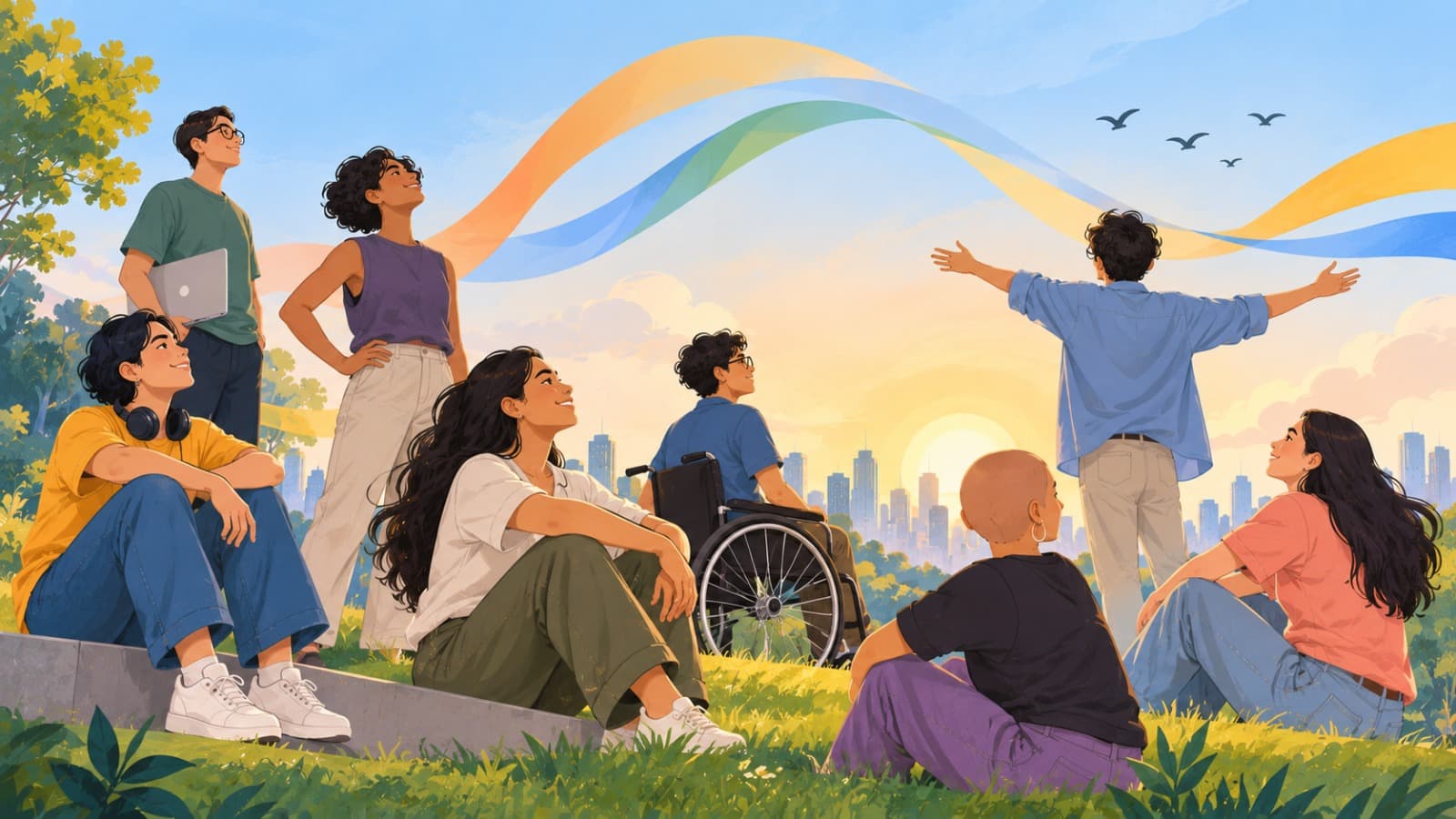
A Future in Fast Forward. Gender Conditioning in a Time Warp.
It's time to question what we've inherited, challenge what we've normalised, and unlearn the expectations
While putting together some content and gathering my thoughts for International Men's Day, around this year's theme, The Future Is Everyone , I found myself going down a bit of a rabbit hole.
I began thinking about what it really means for the future to be for everyone. And the more I thought about it, the more I realised that perhaps we need to look closer at the many assumptions we carry about gender, often without even realising it.
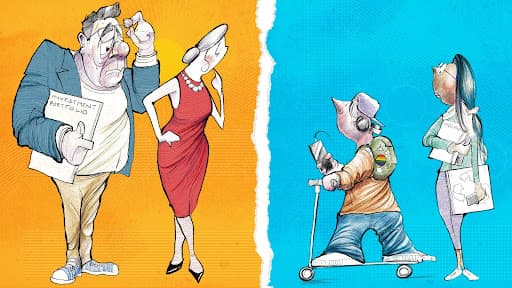
We are living in a time of extraordinary progress. Technology, medicine, education and the world of work are evolving at a pace we could hardly have imagined a few decades ago. Yet, when it comes to gender expectations, we often seem to be operating from a very different timeline.
Why do we continue to define who people should be, how they should behave, what they can do, whom they should love and even what they should aspire to?
Take life skills, for instance. Why are boys more likely to be taught how to fix a fuse or change a cycle tyre, while girls are expected to know how to run a kitchen or apply make-up? Why do we assume men will handle the finances while women remember everyone's birthdays, manage the household calendar and somehow know where every missing item in the house is?
I'm exaggerating a little, of course. But not by much!
These expectations are so familiar that we rarely stop to question where they came from. And I'm not sure any of us are entirely free of them. We may question some, disagree with others, and still find ourselves reinforcing a few in our everyday lives.
It starts much earlier than we think
Most of us probably don't remember when we first learnt what it meant to be a boy or a girl. But the messages start surprisingly early.Think about the clothes, colours, toys and activities associated with boys and girls. Boys may be encouraged to play with cars, trains, cricket bats and superheroes, while girls are more likely to be offered dolls and kitchen sets. Even the pink-for-girls and blue-for-boys convention, rooted in Western consumer culture and marketing, has become familiar in contemporary India.
As children grow, these messages become more pronounced. Boys may be encouraged to be adventurous, independent and tough. Girls may be expected to be caring, accommodating and responsible. Girls are often drawn into household chores or caregiving, while boys may be given more freedom to explore and take risks.
And what happens when a child doesn't quite fit these expectations? They may find themselves questioned, corrected or encouraged to change. LGBTQIA+ individuals can grow up facing similar pressures around their identity, expression and who they are expected to become.
It is interesting how early we attach labels to things that are, in themselves, simply interests, preferences or abilities.
Is it nature, or have we learnt it?
Of course, biological differences exist. But how much can biology really tell us about whether someone will be assertive or gentle, ambitious or nurturing, emotionally expressive or reserved?Human behaviour is shaped by a combination of biology, psychology, personal experiences, environment and social conditioning. Hormones may influence aspects of mood and behaviour, but they cannot determine someone's personality, abilities or choices.
Consider something as familiar as crying. Women, on average, report crying more frequently than men. Biological factors may contribute, but I wonder how much of this is also shaped by what we learn growing up. Girls are often given more permission to express sadness, while boys hear messages such as "Boys don't cry" or "Be a man."
Over time, boys may learn to suppress certain emotions or express distress differently. Does crying more necessarily mean feeling more? Or could we simply be learning different ways of expressing what we feel?
Perhaps we sometimes give nature credit for things that nurture has had a hand in shaping.
Have you ever wondered why someone might wish they were a man?
I have often wondered what women really mean when they say they wish they had been born men.Is it simply about wanting to be stronger or more independent? Or is it also about the everyday freedoms many men may not even realise they enjoy? Being able to travel with fewer apprehensions, having fewer restrictions on mobility, making decisions with greater autonomy, being taken more seriously or simply being treated with respect.
There is also the privilege society extends to men. Anger, for instance, may be seen as assertiveness or authority in a man, while the same expression in a woman may be labelled difficult or aggressive. Sometimes even aggression is normalised in ways that should make us uncomfortable.
Why should women have to wish they were men to experience safety, freedom and respect? And why should men have to live up to the pressure of being strong, stoic and invulnerable to retain that social standing?
For many LGBTQIA+ individuals, the freedom to express their identity, form relationships openly or simply exist without having to explain or defend who they are can still be a struggle.
Perhaps the issue is not just the expectations attached to gender, but the unequal freedoms and privileges that accompany them.
Just because we've always done it this way...
History, mythology, religion and tradition are important parts of our identities. They offer stories, values, wisdom and a sense of belonging. Questioning gender expectations doesn't necessarily mean dismissing everything that has come before us.But we have questioned old practices, challenged established beliefs and adapted as knowledge and circumstances have changed. Why, then, do some restrictive gender expectations continue to survive, sometimes reinforced in the name of tradition, culture or values?
Perhaps there is a difference between valuing our traditions and assuming that everything inherited from the past must remain relevant today.
Our past can inform our future without having to dictate it.
What do we miss out on when we put people in boxes?
Women continue to shoulder a disproportionate share of unpaid domestic and caregiving work, affecting their time, opportunities and financial independence. Men, meanwhile, can find themselves caught in the expectation that they must always provide, protect and hold everything together. LGBTQIA+ individuals can face exclusion, discrimination and pressure to conceal parts of their identity to be accepted.But beyond these challenges, there is also the potential we miss out on. When caregiving is seen as women's work, men lose opportunities to participate more fully in family life. When leadership is associated with traditionally masculine traits, we may overlook capable leaders who don't fit that mould. When people are expected to conform to conventional ideas of gender, we miss out on talents, perspectives and contributions that could enrich our workplaces and society.
It seems a rather high price to pay for holding on to assumptions we may never have consciously chosen in the first place.
Maybe it begins with noticing
I'm not sure there are simple answers to all of this. Nor do I think the idea is to replace one set of rigid expectations with another.Perhaps it begins with noticing the assumptions we make, including the ones we have never questioned in ourselves. Why do we instinctively associate certain jobs, responsibilities, behaviours or interests with a particular gender? Why do some choices seem perfectly normal for one person but unusual for another?
We could start by being more open to sharing responsibilities, allowing children to explore interests without attaching gender labels, and recognising that strength, courage, ambition, empathy, vulnerability and the ability to nurture are human qualities.
We don't have to get everything right immediately. But being willing to question what we have always believed, and allowing ourselves to keep learning and unlearning, is probably a good place to begin.
And perhaps that's what being human is about
The more I think about it, the more I feel this conversation is about something much bigger than men, women or even gender equality.We are all different. We have different identities, personalities, strengths, interests, experiences and aspirations. Why should any of us have to fit into a prescribed mould to be accepted?
Perhaps the real aspiration should be a world where people have the freedom to choose who they want to be and what that means to them. Where there is no prescribed list of attributes that makes someone more or less of a man, a woman or a person.
At its heart, this is about the freedom to be ourselves. To make choices that reflect who we are, to discover, change, grow and become better versions of ourselves with each passing day.
It is such a basic human need, and yet we sometimes make it so complicated.
So, as I return to this year's Men's Day theme, The Future Is Everyone, I find myself thinking that perhaps the future we want to create begins with allowing everyone that freedom.
Because, ultimately, this isn't just about how we define gender. It's about how we make room for people to simply be human.
Beyond International Men’s Day, let's keep the conversation going — towards a future where all of us have the freedom to be unapologetically ourselves, while respecting and embracing each other's differences.
#InternationalMensDay #GenderConditioning #GenderEquality #BreakingStereotypes #GenderInclusivity #WorkplaceInclusion #DEI #InterweaveConsulting
Rajani Rajan, Interweave Consulting Pvt. Ltd.